


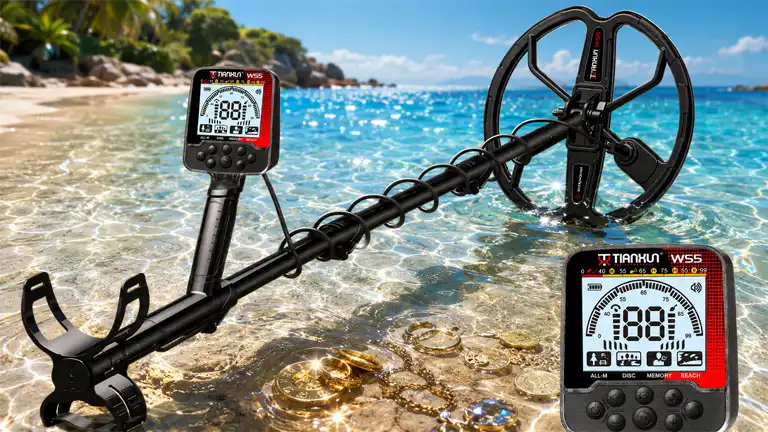
How to Choose a Gold Detector for Mining and Treasure Hunting
Introduction: Finding the Right Gold Detector Matters
Choosing the right gold detector is one of the most important decisions for anyone involved in gold prospecting, mining exploration, or treasure hunting.
With many different types of detectors available on the market, buyers often ask:
- What is the best gold detector for mining?
- How deep can a gold detector detect gold?
- Should I choose a VLF or Pulse Induction (PI) gold detector?
- What features should a professional gold detector have?
The answer depends on your detection purpose, target depth, environment, and experience level.
A suitable gold detector can help prospectors locate gold nuggets, buried metal objects, historical relics, and underground targets more efficiently.
[Image Suggestion 1: Professional gold detector being used outdoors in desert or mining area]
1. Understand Your Detection Purpose
Before purchasing a gold detector, the first step is understanding what you want to find.
Different applications require different detection technologies.
Gold Prospecting
Gold prospecting focuses mainly on finding natural gold, including:
- Gold nuggets
- Small gold particles
- Gold-bearing areas
- Mineralized zones
For gold prospecting, sensitivity and ground balance capability are extremely important.
Professional prospectors usually prefer detectors designed specifically for mineralized environments, especially in areas with highly magnetic soil.
Treasure Hunting
Treasure hunting usually involves searching for:
- Coins
- Jewelry
- Historical artifacts
- Buried metal objects
Treasure hunters often require:
- Good target identification
- Adjustable sensitivity
- Easy operation
- Lightweight design
A detector suitable for hobby treasure hunting may not always provide the performance required for professional mining exploration.
[Image Suggestion 2: Comparison image showing gold prospecting vs treasure hunting]
2. Choose Between VLF and Pulse Induction (PI) Technology
One of the most important factors when selecting a gold detector is the detection technology.
VLF Gold Detector
Very Low Frequency (VLF) detectors are widely used for general metal detection.
Advantages:
- High sensitivity to small targets
- Lightweight and portable
- Lower price
- Suitable for beginners
Disadvantages:
- More affected by mineralized soil
- Limited depth compared with professional PI detectors
VLF detectors are commonly used for:
- Coin hunting
- Jewelry searching
- Shallow gold prospecting
Pulse Induction (PI) Gold Detector
Pulse Induction technology is widely used in professional gold exploration.
Advantages:
- Better performance in highly mineralized ground
- Greater detection depth
- Stronger resistance to soil interference
- Suitable for desert and mining environments
PI gold detectors are commonly selected for:
- African gold prospecting
- Desert exploration
- Professional mining applications
For serious gold prospectors, a Pulse Induction gold detector is usually the preferred choice.
[Image Suggestion 3: VLF vs PI technology comparison infographic]
3. Consider Detection Depth
Many buyers focus on one question:
How Deep Can a Gold Detector Detect?
The detection depth depends on many factors:
- Target size
- Gold purity
- Soil conditions
- Detector technology
- Search coil size
- Operating frequency
Small gold nuggets may only be detected at shallow depths, while larger metal targets can often be detected much deeper.
Professional deep search gold detectors are designed to locate larger targets underground where standard detectors may not perform effectively.
A good gold detector should provide a balance between:
- Sensitivity
- Depth
- Stability
- Accuracy
4. Select the Right Search Coil
The search coil is a critical component of any gold detector.
Different coil sizes provide different advantages.
Small Search Coil
Best for:
- Small gold nuggets
- High sensitivity
- Areas with many obstacles
Advantages:
- Better target separation
- Easier operation
Large Search Coil
Best for:
- Deep targets
- Large gold objects
- Open mining areas
Advantages:
- Larger detection coverage
- Improved depth performance
For professional gold exploration, many users choose detectors with interchangeable coils for different environments.
[Image Suggestion 4: Different sizes of detector search coils]
5. Evaluate Ground Balance Performance
Natural environments often contain minerals that can interfere with metal detection.
Examples:
- Iron minerals
- Magnetic rocks
- Volcanic soil
- Highly mineralized ground
A quality gold detector should include effective ground balance functions.
Ground balance helps:
- Reduce false signals
- Improve detection stability
- Increase target accuracy
This feature is especially important in gold mining regions such as:
- Africa
- Australia
- South America
- The Middle East
6. Choose a Detector According to Your Environment
Different environments require different detector capabilities.
Desert Areas
Recommended features:
- Strong mineral resistance
- High depth capability
- Large search coil options
Mountain Areas
Recommended features:
- Lightweight design
- Portable structure
- Stable operation
Mining Areas
Recommended features:
- Professional detection performance
- Long working time
- Reliable construction
- Easy maintenance
[Image Suggestion 5: Gold detector working in different environments]
7. Professional Gold Detector Features to Look For
When selecting a professional gold detector, consider these important features:
High Sensitivity
Allows detection of smaller gold targets.
Adjustable Detection Modes
Different modes improve performance for different applications.
Digital Display
Provides information such as:
- Target signal
- Battery status
- Detection settings
Long Battery Life
Important for remote exploration areas.
Portable Design
Useful for field operations and transportation.
Durable Construction
Mining environments require equipment that can withstand:
- Dust
- Temperature changes
- Outdoor conditions
8. Gold Detector for African Mining Applications
Africa is one of the world’s important gold exploration regions.
Countries including:
- Ghana
- Sudan
- Zimbabwe
- Tanzania
- Mali
- Nigeria
have active gold prospecting activities.
For African mining applications, buyers usually require:
- Deep detection capability
- Strong mineral resistance
- Portable operation
- Affordable maintenance
- Reliable supplier support
A professional gold detector can be an effective tool for small-scale miners and exploration teams.
[Image Suggestion 6: African gold prospecting field operation]
9. Gold Detector vs Metal Detector: What Is the Difference?
Many customers confuse gold detectors with standard metal detectors.
| Feature | Gold Detector | Standard Metal Detector |
|---|---|---|
| Main Target | Natural gold, nuggets | Coins, jewelry, metal objects |
| Technology | Usually PI or advanced VLF | Mostly VLF |
| Mineralized Soil Performance | Better | Limited |
| Detection Depth | Usually deeper | Medium |
| Application | Mining exploration | Hobby detection |
If your goal is professional gold exploration, a dedicated gold detector is usually a better choice.
10. How to Choose the Best Gold Detector?
Before buying, ask yourself:
- What type of targets do I want to find?
- Where will I use the detector?
- Is the soil highly mineralized?
- Do I need deep detection capability?
- Am I buying for hobby use or professional mining?
- Does the supplier provide technical support?
Choosing the right detector is not only about price. The best gold detector is the one that matches your exploration environment and detection goals.
Conclusion: Invest in the Right Gold Detection Technology
A reliable gold detector can significantly improve efficiency in gold prospecting and treasure hunting.
For beginners, a simple and easy-to-use detector may be enough.
For professional miners and exploration companies, choosing a high-performance detector with strong depth capability, stable operation, and advanced technology is essential.
Whether searching for gold nuggets, buried treasures, or underground metal targets, selecting the right gold detector is the first step toward successful exploration.
Frequently Asked Questions (FAQ)
What is the best gold detector for beginners?
Beginners should choose a detector that is easy to operate, lightweight, and provides stable detection performance.
Can a metal detector find gold?
Yes, but dedicated gold detectors are usually more sensitive and better optimized for natural gold detection.
What is better, VLF or PI gold detector?
VLF detectors are suitable for shallow targets and beginners. PI detectors are better for professional gold prospecting in mineralized environments.
How deep can a professional gold detector detect?
Detection depth depends on target size, soil conditions, and equipment technology. Larger targets can generally be detected deeper than small gold nuggets.
Which gold detector is suitable for mining?
Professional mining applications usually require a detector with strong mineral resistance, deep detection capability, and reliable field performance.